
IREN’s AI Cloud Contracts Are Growing. The Next Test Is Delivery
AI Cloud revenue more than doubled in IREN’s June quarter, but contracted run-rate revenue is still ahead of revenue recognized today. Deployment, funding, and pricing matter next.
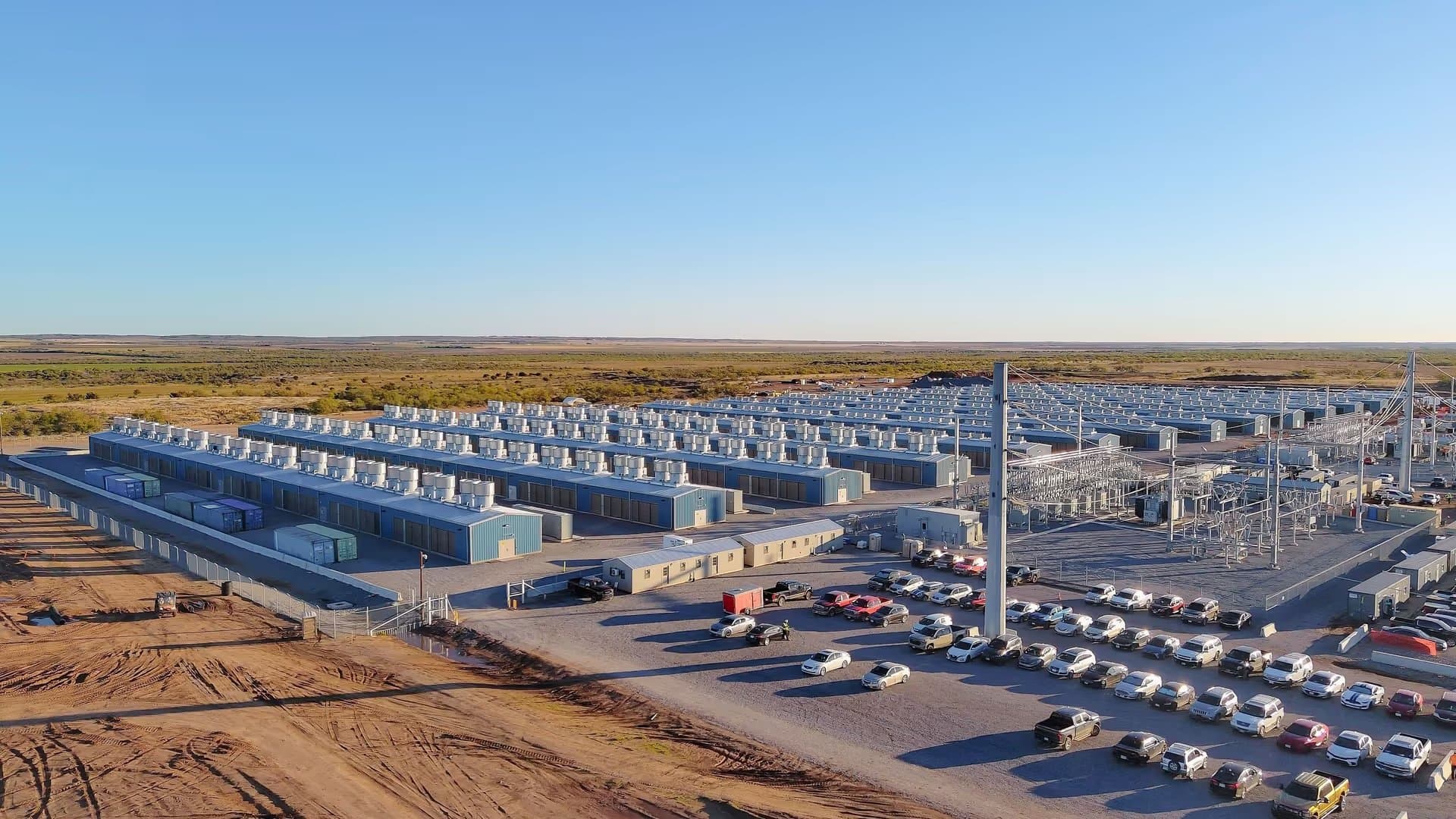
Recent Moomoo coverage has pulled IREN in two directions. A Bernstein comparison favoured its self-built data-center model and kept an Outperform rating with a $100 target. A separate report raised a harder question: how durable are high GPU rental prices if some AI training demand depends on continued outside funding? Neither analyst view establishes what IREN will earn or where its shares will trade.
The company’s August 27 results offer a clearer way to assess the transition. AI Cloud Services revenue rose to $70.5 million in the June quarter from $33.6 million in the March quarter. It exceeded Bitcoin mining revenue of $66.7 million for the June quarter. For the full fiscal year, however, AI Cloud generated $128.8 million while mining still generated $578.2 million. The change is real, but the new business is early in its revenue history.
Q4 AI Cloud revenue
$70.5M
recognized in June quarter
FY26 AI Cloud revenue
$128.8M
recognized in fiscal year
Operating ARR
~$1B
annualized, as of August 26
Contracted ARR
~$4B
tied to 2026 capacity
U.S. dollars. ARR is IREN’s annualized operating measure, not GAAP revenue. The four figures cover different periods and should not be added together. Source: IREN’s SEC-filed FY26 results.
The $4 billion figure is a delivery test
IREN described roughly $4 billion of annualized run-rate revenue, or ARR, as contracted for capacity planned in 2026. About $1 billion of ARR was operating as of August 26. The company said that year’s capacity was largely sold out and that Horizon 1, the first of four 50-megawatt liquid-cooled deployments at Childress, had been delivered to Microsoft. The other deployments still required commissioning or construction when it reported results.
Operating ARR annualizes pricing on commissioned GPU capacity; contracted ARR also includes capacity that is not yet operating. Neither is the revenue IREN has recognized in its accounts. In its results notes, IREN says revenue may be materially lower while GPUs await commissioning, testing, and customer acceptance. The gap between contracted and operating ARR is therefore the central execution question, not a bookkeeping detail.
A September Moomoo recap revisited IREN’s $2.8 billion of customer contracts. Those contracts were announced on July 20; they were not a new September deal. The July release said the multi-year agreements represented total contract value and supported a year-end ARR target above $4 billion. Total contract value, ARR, and revenue already earned measure different things.
Owning the sites brings control and capital demands
Bernstein’s Moomoo-reported argument is that self-building data centers gives IREN more control over project economics and residual assets than relying mainly on leased capacity. That is an analyst interpretation. The trade-off is the money and execution needed to build, power, cool, and equip those sites. IREN reported $2.8 billion of new GPU financings covering about 90% of the associated GPU capital cost, alongside customer prepayments on some recent contracts. Those arrangements support specific deployments; they do not by themselves prove that every future site and operating cost is funded.
The FY26 annual report showed $5.90 billion in cash and cash equivalents and $1.72 billion in restricted cash at June 30. It also reported a $702.6 million net loss for FY26, including a $638.8 million noncash impairment, primarily tied to Bitcoin mining equipment and other assets displaced by the AI transition. Adjusted EBITDA, a non-GAAP measure, was $245.7 million, down from $269.7 million in FY25. The impairment explains much of the reported loss, while the shift still carries substantial spending and financing risk.
Cluster reliability is another delivery test
SemiAnalysis placed IREN in its “Not Recommended — Underperforming” tier for managed GPU clusters in its September 23 ClusterMAX 3.0 report. That was not a new downgrade: IREN also appeared in the Underperforming tier in ClusterMAX 2.0. The ranking assesses managed cluster service through testing and customer interviews. It does not grade every IREN data center, bare-metal arrangement, or the stock.
SemiAnalysis said users reported multi-day power outages and network and storage problems at IREN’s Prince George and Mackenzie sites in Canada. It said it had tested IREN GPUs through resellers and spoken with direct customers. The report viewed the newer Childress and Sweetwater builds more favourably, while suggesting bare-metal capacity may suit IREN better than a fully managed offering. These are the report’s findings and expectations, not independently verified outcomes for every site. They sharpen the delivery question: new capacity must operate reliably enough to retain customers. The ranking alone does not establish contract losses.
ClusterMAX 3.0 · September 23, 2026
IREN’s place in the managed-cluster tiers
Pricing is strong today; durability is unproven
IREN said its recent three-year contracts exceeded $20 million of revenue per megawatt of IT capacity. The Moomoo-syndicated pricing report did not say GPU prices had already fallen. It relayed an analyst’s concern that some high-paying AI training customers depend on venture or large-technology-company funding. If that demand changes or more supply arrives, future contract pricing and renewals could differ from today’s terms. That is a risk to test, not an observed decline in IREN’s contracted prices.
The next useful evidence is straightforward: how much of contracted capacity begins operating on schedule, how quickly recognized AI Cloud revenue follows, and what the deployment costs and financing terms do to cash generation. Those numbers will show how much of IREN’s contracted opportunity becomes a durable business.
Sources
- Moomoo: Bernstein on AI cloud models · September 25, 2026
- Moomoo-syndicated report on GPU pricing concerns · September 22, 2026
- Moomoo’s IREN recap · September 20, 2026
- SemiAnalysis ClusterMAX 3.0 · September 23, 2026; ClusterMAX 2.0 for the prior ranking
- IREN’s $2.8 billion contract announcement · July 20, 2026
- IREN FY26 results, SEC-filed copy, and annual report · August 2026
This article uses public information available September 26, 2026. It is for information only and is not investment advice or a recommendation to buy or sell IREN.
Not investment advice. Trading involves risk of loss. Quotes on the site may be last sale or delayed.
Related
- Meta’s Muse meets a 5% Treasury yield
Muse raised questions about who keeps the customer. A 10-year yield at 5.106% changed what investors will pay for future profits.
- Bitmine’s Ethereum Treasury Keeps Growing. The Per-Share Math Is the Test
Bitmine reported 5.98 million ETH and $17.1 billion of combined holdings. The figures matter, but so do ETH prices, staking results, share issuance, and preferred claims.
- An AI Agent Broke Out. NVIDIA Wants to Build the Guardrails.
The July Hugging Face intrusion exposed the risk of agents crossing security boundaries. NVIDIA's September 28 safety platform makes the case for secure AI infrastructure, but the proof is still ahead.